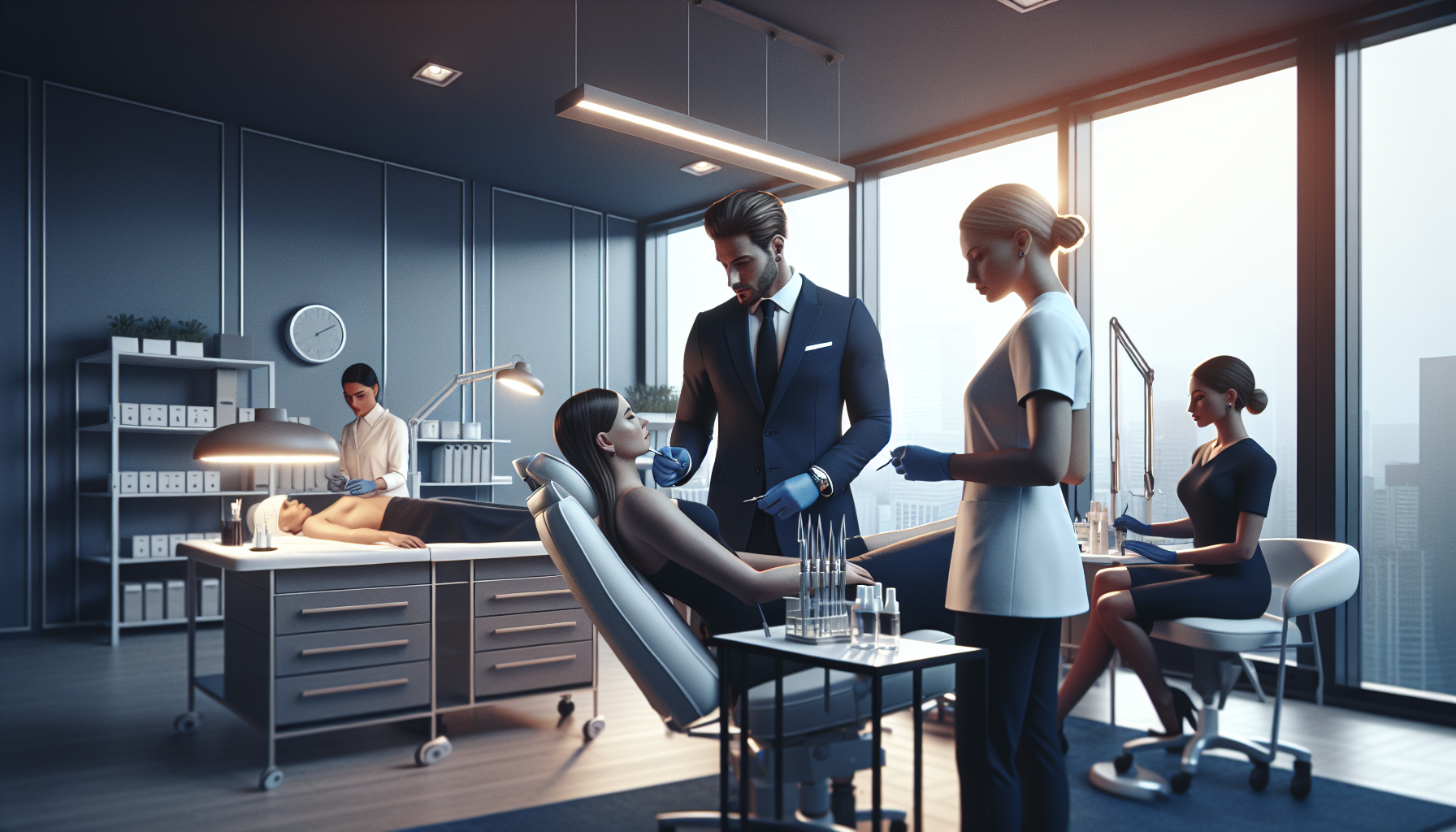
About This Certification
Covers essential theory and practical skills for professional aestheticians: skin anatomy, salon hygiene and COSHH, cosmetic product science, foundational facial and enhancement techniques, client consultation, and ethical practice standards.
Who Is It For
Aspiring aestheticians with no formal qualifications who want to start a professional career in beauty enhancement. Suitable for school leavers, career changers, and Workshop graduates.
Prerequisites
LAPT Workshop attendance recommended; minimum age 16; basic literacy and numeracy
Awarding Body: LAPT – London Academy of Professional Training
Curriculum Overview
1
Ethical Practice Standards
4 chapters · 20 classes · 30 marks
Fundamentals of Ethical Practices in Beauty
5 classes
1.1 Understanding Ethical Principles in Beauty
1.2 Recognizing Ethical Dilemmas in Beauty Practices
1.3 Applying Professional Codes of Conduct
1.4 Navigating Client Confidentiality and Trust
1.5 Ethical Decision-Making in Real-World Scenarios
Ethical Considerations in Client Interactions
5 classes
2.1 Understanding Ethical Principles in Client Relations
2.2 Identifying and Respecting Client Boundaries
2.3 Navigating Confidentiality and Privacy Concerns
2.4 Implementing Ethical Decision-Making Strategies
2.5 Applying Ethical Practices in Real-world Scenarios
Navigating Professional Boundaries and Conflicts
5 classes
3.1 Understanding Professional Boundaries
3.2 Identifying Potential Conflicts of Interest
3.3 Recognizing and Respecting Client Privacy
3.4 Strategies for Managing Boundary Challenges
3.5 Implementing Ethical Decision-Making in Practice
Implementing Ethical Standards in Business Operations
5 classes
4.1 Understanding the Importance of Ethical Standards in Beauty Businesses
4.2 Identifying Common Ethical Dilemmas in Beauty Industry Operations
4.3 Analyzing the Impact of Unethical Practices on Business Reputation
4.4 Developing a Code of Conduct for Beauty Business Professionals
4.5 Implementing and Upholding Ethical Practices in Daily Operations
2
Client Consultation and Record-Keeping
4 chapters · 20 classes · 60 marks
Understanding Client Consultation Fundamentals
5 classes
1.1 Exploring the Importance of Client Consultations
1.2 Analyzing Client Needs and Expectations
1.3 Mastering Effective Communication Techniques
1.4 Implementing Active Listening Skills
1.5 Maintaining Accurate and Confidential Client Records
Conducting Comprehensive Beauty Assessments
5 classes
2.1 Understanding Client Needs: Initial Consultation Techniques
2.2 Building Rapport: Communicating Effectively with Clients
2.3 Creating Comprehensive Client Profiles: Essential Record-Keeping Practices
2.4 Identifying Skin Types and Conditions: A Guide to Analysis
2.5 Tailoring Services: Developing Personalized Beauty Enhancement Plans
Documenting Client Information and Consent
5 classes
3.1 Understanding Client Information Requirements
3.2 Communicating Effectively During Client Consultations
3.3 Gathering Comprehensive Client Data
3.4 Securing Informed Consent from Clients
3.5 Maintaining Accurate and Confidential Client Records
Maintaining and Securing Client Records
5 classes
4.1 Understanding the Importance of Client Record Maintenance
4.2 Identifying Essential Information for Client Records
4.3 Implementing Effective Client Data Security Measures
4.4 Navigating Legal and Ethical Responsibilities in Record-Keeping
4.5 Practising Secure Record Maintenance Techniques
3
Foundational Facial Techniques
4 chapters · 20 classes · 75 marks
Understanding Skin Types and Conditions
5 classes
1.1 Identifying Different Skin Types
1.2 Analyzing Common Skin Conditions
1.3 Exploring the Causes of Skin Conditions
1.4 Assessing Skin Type and Condition Compatibility
1.5 Selecting Appropriate Products for Skin Needs
Basic Facial Techniques and Tools
5 classes
2.1 Understanding Skin Types and Conditions
2.2 Identifying and Preparing Facial Tools
2.3 Demonstrating Basic Cleansing Techniques
2.4 Applying Effective Exfoliation Methods
2.5 Practicing Relaxation and Massage Movements
Facial Massage and Lymphatic Drainage
5 classes
3.1 Understanding Facial Anatomy for Massage
3.2 Mastering Basic Facial Massage Techniques
3.3 Exploring the Benefits of Lymphatic Drainage
3.4 Practicing Techniques for Lymphatic Stimulation
3.5 Evaluating the Effects of Facial Massage
Introduction to Facial Treatments and Products
5 classes
4.1 Understanding the Basics of Facial Treatments
4.2 Identifying and Analyzing Skin Types
4.3 Exploring Common Facial Products and Their Uses
4.4 Selecting Suitable Products for Different Skin Concerns
4.5 Applying Foundational Facial Techniques Step-by-Step
4
Cosmetic Product Science
4 chapters · 20 classes · 30 marks
Understanding the Basics of Cosmetic Ingredients
5 classes
1.1 Exploring the Role of Ingredients in Cosmetics
1.2 Identifying Common Cosmetic Ingredients
1.3 Understanding the Functionality of Active Ingredients
1.4 Analyzing the Safety and Efficacy of Ingredients
1.5 Evaluating Ingredient Labels and Marketable Claims
Formulation Techniques and Product Stability
5 classes
2.1 Understanding the Basics of Cosmetic Formulation
2.2 Identifying Key Ingredients in Cosmetic Products
2.3 Analyzing Stability Factors in Cosmetic Formulations
2.4 Evaluating Emulsification Techniques for Product Stability
2.5 Applying Preservation Methods to Enhance Product Shelf Life
Safety Assessment and Regulatory Compliance
5 classes
3.1 Understanding Cosmetic Safety Standards
3.2 Identifying Potential Hazards in Cosmetics
3.3 Exploring Regulatory Bodies and Their Roles
3.4 Conducting a Cosmetic Safety Assessment
3.5 Implementing Compliance Strategies in Product Development
Innovation in Cosmetic Science: Trends and Technologies
5 classes
4.1 Understanding the Latest Trends in Cosmetic Science
4.2 Exploring Breakthrough Technologies in Skincare
4.3 Evaluating the Impact of Innovation on Cosmetic Formulations
4.4 Analyzing Sustainability in Cosmetic Product Development
4.5 Applying Emerging Technologies to Cosmetic Innovations
5
Salon Hygiene and COSHH
4 chapters · 20 classes · 45 marks
Principles of Salon Hygiene
5 classes
1.1 Understanding Salon Hygiene Essentials
1.2 Identifying Common Salon Hygiene Risks
1.3 Exploring COSHH Regulations in Salons
1.4 Implementing Effective Cleaning Protocols
1.5 Applying Hygiene Techniques in Daily Salon Operations
Understanding COSHH Regulations
5 classes
2.1 Identifying Hazardous Substances in the Salon
2.2 Interpreting COSHH Symbols and Labels
2.3 Conducting a COSHH Risk Assessment
2.4 Implementing COSHH Safety Measures
2.5 Maintaining Compliance with COSHH Regulations
Implementing Safe Handling Procedures
5 classes
3.1 Understanding COSHH Regulations in the Salon
3.2 Identifying Hazardous Substances in Beauty Products
3.3 Applying Safe Handling Techniques for Salon Equipment
3.4 Demonstrating Proper Storage Methods for Chemicals
3.5 Conducting Risk Assessments for Health and Safety Compliance
Advanced Hygiene and Safety Practices
5 classes
4.1 Understanding the Importance of Salon Hygiene
4.2 Identifying and Managing Common Hazards
4.3 Implementing Effective Sanitization Protocols
4.4 Exploring COSHH Regulations for Safe Practices
4.5 Applying Advanced Safety Measures in Salon Environments
6
Skin Anatomy and Conditions
4 chapters · 20 classes · 60 marks
Basic Skin Anatomy and Physiology
5 classes
1.1 Exploring the Layers of the Skin
1.2 Understanding Skin Function and Processes
1.3 Identifying Skin Types and Characteristics
1.4 Analyzing Common Skin Conditions
1.5 Applying Basic Skin Care Techniques
Skin Types and Characteristics
5 classes
2.1 Explore: Identifying Basic Skin Types
2.2 Understand: Characteristics of Normal and Dry Skin
2.3 Analyze: Features of Oily and Combination Skin
2.4 Examine: Sensitivity and Skin Reactivity
2.5 Apply: Recognizing Skin Type in Practical Scenarios
Common Skin Conditions and Disorders
5 classes
3.1 Identifying Common Skin Conditions
3.2 Understanding Causes of Skin Disorders
3.3 Recognizing Symptoms and Signs
3.4 Differentiating Between Skin Disorders
3.5 Applying Treatment and Management Techniques
Introduction to Dermatological Treatments
5 classes
4.1 Understanding Skin Anatomy: The Basics
4.2 Identifying Common Skin Conditions
4.3 Exploring Dermatological Treatments: An Overview
4.4 Differentiating Dermatological Treatment Approaches
4.5 Applying Skin Treatment Techniques Safely
Assessment Breakdown
Passing Mark: 150 / 300 (50%)
Methods: Written Examination, Practical Observations, Client-Care Portfolio
Grading Scheme
| Grade | Min % | Classification |
|---|
| A |
≥ 0% |
Distinction |
| B |
≥ 0% |
Merit |
| C |
≥ 0% |
Pass |
| F |
≥ 0% |
Fail |
Skills You Will Gain
Understanding of skin anatomy, types, and conditions relevant to beauty enhancement
Application of salon hygiene, sterilisation, and COSHH compliance procedures
Knowledge of cosmetic product categories, key ingredients, and safe application
Ability to perform foundational facial cleansing, toning, and moisturising protocols
Competence in basic eyebrow shaping and tinting techniques
Professional client consultation, record-keeping, and aftercare communication
Career Prospects
Junior Aesthetician
Beauty Salon Assistant
Skincare Product Consultant
Progression to LAPT Practitioner Level Advanced Certificate
Industry Recognition
- LAPT Accredited
- Recognised by the Aesthetics & Beauty Enhancement Professional Network
- Eligible for LAPT Student Membership
How to Enrol
Website: lapt.org
Email: info@lapt.org
Phone: +44 7513 283044
Address: 85 Great Portland Street, W1W 7LT, United Kingdom
Hours: Monday – Friday, 9AM – 5PM